


Yes. A surviving spouse may qualify for VA benefits that help pay for professional caregiving at home. The Aid and Attendance (A&A) pension extends through the home health care for veterans program, giving surviving spouses access to supportive services that help them remain safe and comfortable at home.
Many families discover these benefits well after losing their loved one. It’s common to assume that veteran home care support ends with the veteran’s passing, but that’s not the case. A surviving spouse who needs help with bathing, dressing, or daily tasks can receive the same level of home care for veterans.
In this blog, you’ll find a clear overview of the VA benefits that may help a surviving spouse receive steady care at home.
VA Benefits Available to Surviving Spouses for Home Care
Three VA programs can help surviving spouses pay for in-home care for veterans’ families. Each option offers different levels of support, and knowing how they work can guide you toward the right fit.
Aid and Attendance (A&A) Pension
Aid and Attendance offers the strongest financial support for home care needs. This tax-free monthly payment can be applied to the Survivors Pension or Dependency and Indemnity Compensation (DIC) when a surviving spouse needs ongoing personal support.
You may qualify if you require regular guidance with everyday routines or if a disability limits your mobility or eyesight. The maximum monthly amount for surviving spouses is about $1,515.
These funds can support a range of caregiving arrangements, such as:
- Hiring a caregiver to provide steady in-home support
- Receiving help from a family member who provides regular care
- Participating in adult day programs for supervision and engagement
- Adding companionship services that promote comfort and safety
Survivors’ Pension with Housebound Benefits
The Survivors’ Pension provides monthly financial support to low-income surviving spouses of wartime veterans. When you qualify and also need added support at home, your monthly amount can increase through Aid and Attendance or the Housebound addition.
Pension requirements include:
- Surviving spouse status: You must be unmarried. If you remarried and that marriage ended (through divorce or death of the second spouse) before November 1, 1990, you may still qualify.
- Child eligibility: A child must be under 18, under 23, and enrolled in school, or have a disability that began before age 18.
- Income and net worth: Countable income and assets must fall within VA guidelines.
- Needs-based qualification: This program supports survivors with limited income. If someone qualifies for Dependency and Indemnity Compensation (DIC) as well, the VA provides whichever payment is higher.
Dependency and Indemnity Compensation (DIC)
DIC provides monthly support when a veteran’s death is linked to a service-connected condition. It follows its own eligibility path and is separate from the Survivors’ Pension.
If you receive DIC and need extra support at home, you can add the A&A supplement. Many surviving spouses rely on this combination to maintain steady care, including support that aligns with home care for veterans’ widows and widowers.
Also Read: How Veterans Can Take Advantage of VA Home Care Benefits
Eligibility Requirements for Surviving Spouses
Qualifying as a surviving spouse involves several areas that the VA reviews.
Marriage and Remarriage Rules
You must have been legally married to the veteran at the time of their death. Most benefits require the marriage to have lasted at least one year.
The general rule requires you to remain unmarried to continue receiving benefits. If you remarried and that marriage ended before November 1, 1990, you may still qualify. Applications will require documents verifying marriage history.
Veteran Service Requirements
The veteran must have served during a designated wartime period, such as World War II, the Korean era, Vietnam, the Gulf War, or later qualifying conflicts. The requirement calls for at least 90 days of active duty, with one of those days during a wartime period.
An honorable or general discharge is required. If you do not have the veteran’s DD-214 (discharge papers), the VA can assist with retrieving service records.
Medical Need and Care Requirements
To qualify for added support, you must show that you need steady assistance with daily tasks. The VA recognizes specific activities of daily living (ADLs), which include:
- Bathing: Needs help to wash safely
- Dressing: Cannot manage clothing without support
- Toileting: Needs assistance using the bathroom
- Transferring: Unable to move safely between bed, chair, or wheelchair alone
- Eating: Requires help with feeding
A physician must provide a statement that explains your limitations. This documentation helps determine if you qualify for A&A support tied to in-home care for veterans’ surviving spouses.
Income and Asset Limits
The VA sets a net worth cap for Survivors’ Pension and A&A benefits. The current limit is about $159,240 in combined assets. Your primary home and one vehicle are exempt.
Income limits depend on the benefit, and medical costs, including veterans’ home care, can lower your countable income. The VA also reviews any significant asset transfers made within the past three years. If transfers were made to reduce net worth for eligibility purposes, this may affect the timing of your benefits. A VA representative or accredited claims agent can help clarify how this applies to your situation.
How to Apply for VA Surviving Spouse Benefits
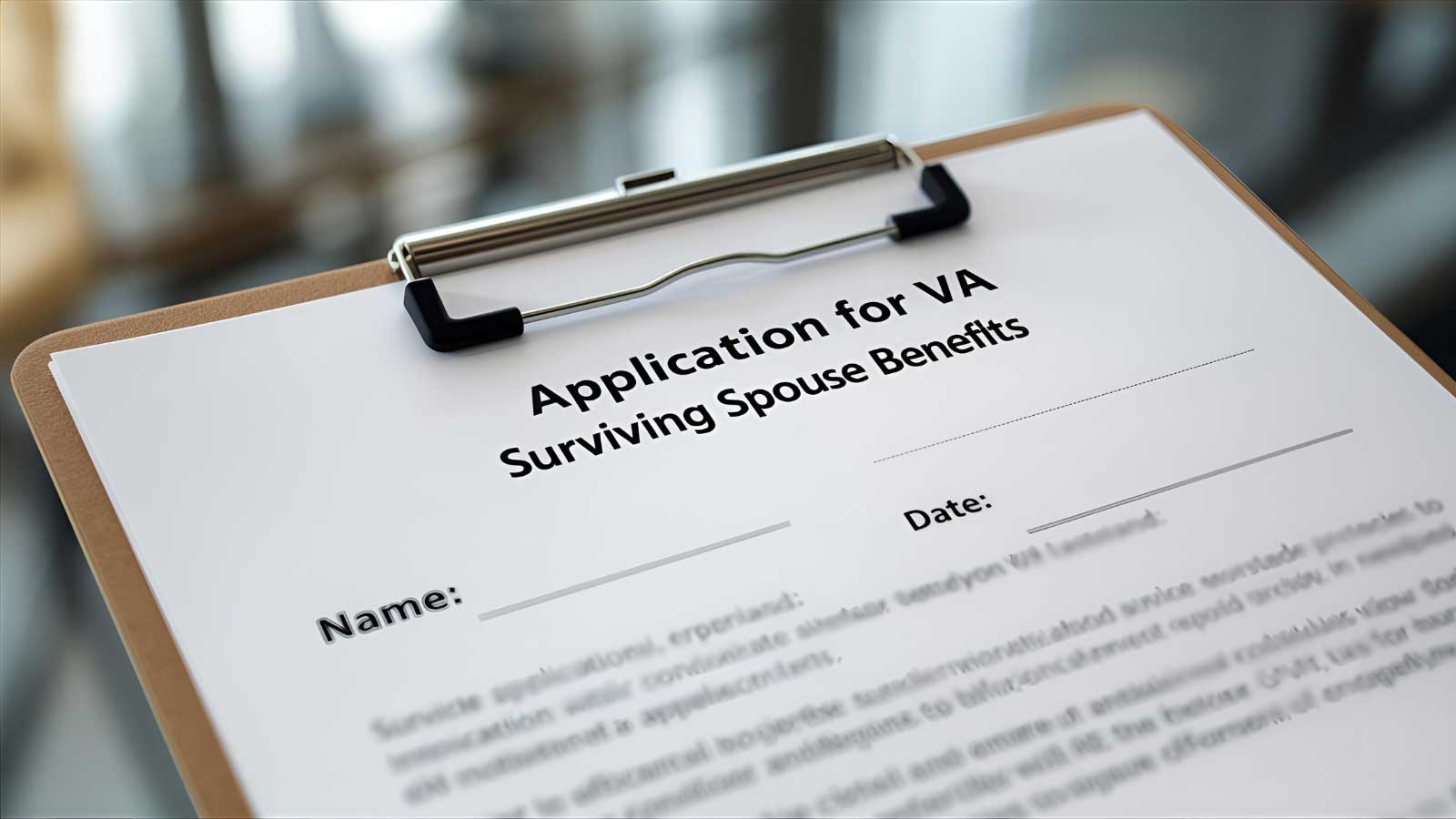
The application process requires specific forms and documents. Many families make decisions within three to six months. Support from a qualified professional can help make the process more manageable.
Required Documentation
Gather these items before starting your application:
- VA Form 21P-534EZ: The official application for DIC, Survivors Pension, and Accrued Benefits
- Marriage certificate: Proof of your legal marriage to the veteran
- Veteran’s death certificate: Verification of passing
- DD-214 or discharge papers: Confirmation of military service
- Medical statement: Your physician’s note describing your care needs
- Financial records: Bank statements, income details, and asset information
- Divorce decree: If either spouse had a previous marriage
Missing documents slow the process more than anything else. Having everything prepared from the start helps your application move forward without delays.
Application Submission Options
You can file your application in the way that feels most comfortable:
- Online through VA.gov: A digital submission that allows quick uploads and status tracking
- By mail to the VA Pension Management Center: A paper option for those who prefer traditional filing. Processing takes longer, but some families find this approach more comfortable.
- Through a Veterans Service Organization (VSO): Free help from trained representatives. These accredited representatives understand exactly what the VA needs and present your case effectively.
- With an accredited claims agent: Personalized assistance for families with complex circumstances or past denials
What Happens After Approval
Once the VA approves your claim, your monthly payment goes directly into your bank account. Some families receive retroactive funds starting from the date they applied, which may arrive as a lump sum.
You may use your benefits toward the type of support that suits your needs, including professional caregivers or family assistance.
Using VA Benefits for Professional Home Care
Approved benefits give families room to shape the type of support they want at home. Many people pair their VA funding with professional veterans’ home care services to create reliable care for a loved one.
What VA Home Care Benefits Can Cover
Your monthly A&A payment can support many types of care, including:
- Personal care assistance
- Medication reminders
- Meal preparation
- Light housekeeping
- Companionship
- Transportation
- Specialized memory care
The VA allows you to use these funds for care-related needs without itemized reporting, giving you the freedom to design in-home care for veterans’ surviving spouses in a way that fits daily life.
Coordinating Benefits with Professional Care Services
Families often ask how far these benefits stretch. The answer depends on local rates and the level of care required.
At current A&A amounts, many families receive the equivalent of 40 to 60 hours of professional support each month, depending on local care rates. Some households combine VA funds with personal resources, long-term care coverage, or Medi-Cal (for those who qualify) to create a more complete care plan.
Targeted scheduling, such as help during morning routines, often helps families make the most of their monthly hours.
Next Read: Understanding the Different Types of Home Care Services Available
Getting Help with Your VA Benefits Application
VA benefits offer meaningful support, and many families feel more at ease once they understand how these programs fit their loved one’s needs. Guidance from someone familiar with the process can make each step feel less overwhelming.
Home Care Providers offers free consultations for Orange County families who want to learn more about veterans’ home care options. During a consultation, our team explains how VA programs work and helps you understand what support may apply to your situation. We adjust scheduling to match benefit budgets and provide visits as short as 30 minutes when needed.
Our caregivers offer warm, dependable support that adapts to each person’s needs, including help with daily routines, safety, and comfort at home. For those who need greater support, 24-hour home care is available. We approach every family with the same respect and kindness we would want for our own loved ones.
Schedule your free consultation now to learn more about how VA benefits can support home health care for veterans’ surviving spouses!

 The Ad Firm


